How to rank in ChatGPT - and how to tell if it actually worked
6 min read
On this page
Ranking in ChatGPT means one thing: the model names your site as a source when it answers a query, not a position in a list you can screenshot. Page 1 for "how to rank in ChatGPT" is a stack of checklists - structure your content, get cited, stay current - and every one of them stops at the checklist. None pairs the advice with a way to check whether following it actually moved anything.
TL;DR - The tactics that repeat across page 1: answer-first structure, standalone paragraphs, visible authority signals, demonstrable freshness, and FAQ schema. None of those pages tell you how to verify it worked. DispatchSEO tracks that as a metric (
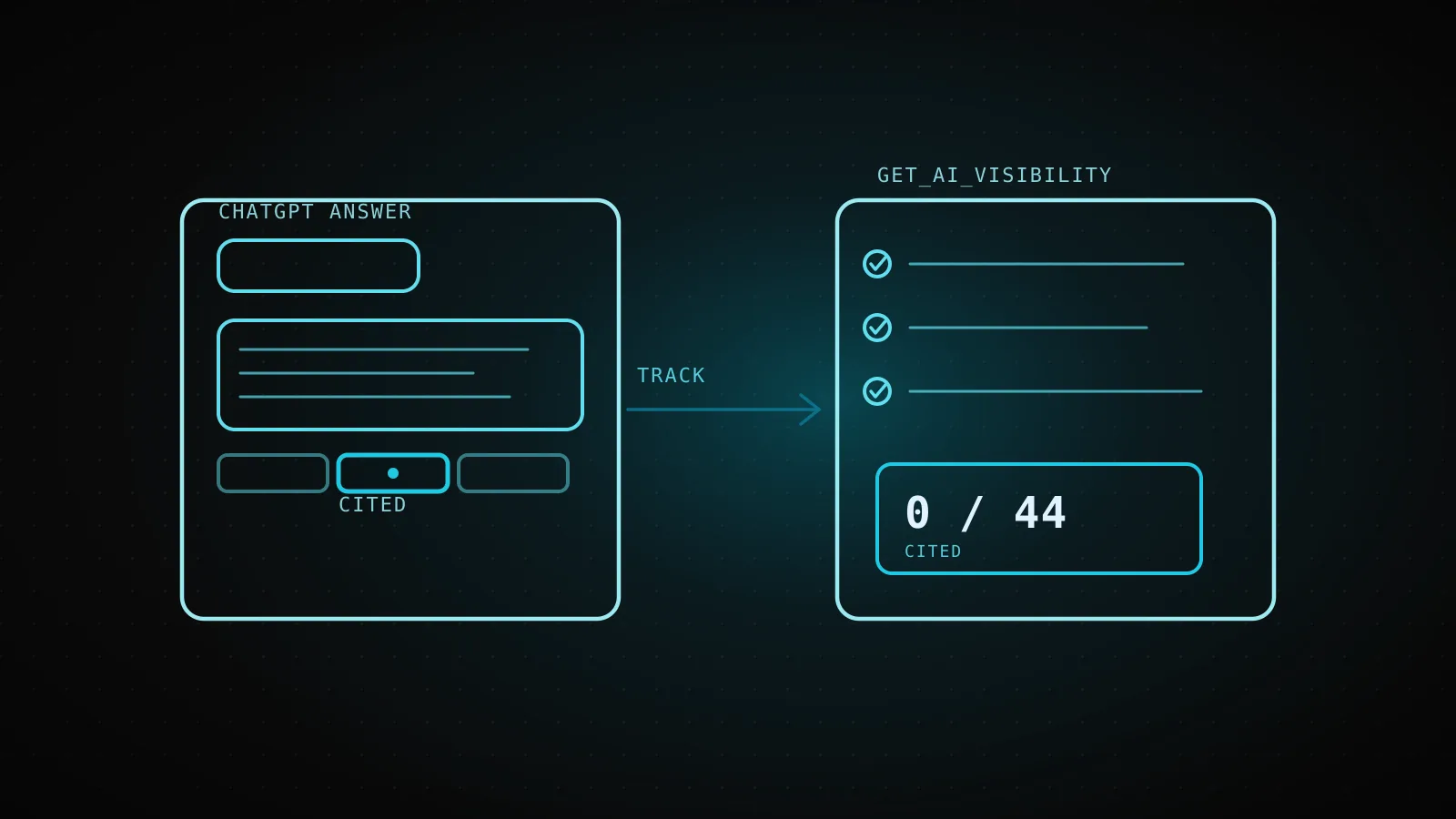
get_ai_visibility,record_ai_citations) the same way it tracks Google rank - and its own numbers, 23 days and 21 guides into doing exactly what the checklist says, are 0 citations across ChatGPT, Claude, and Google AI Overview. The checklist isn't wrong; it just isn't sufficient on its own, and nothing on page 1 says so.
What "ranking in ChatGPT" actually means
There's no ranked list to climb. Ask ChatGPT a question and it generates one answer, optionally naming a handful of sources - being "ranked" is being one of those names, or not. That's a binary per query, not a position: a site can be the only source cited on one query and absent on the next, with no in-between to track the way a #4-to-#2 move works in Google. The metric that actually applies is a citation rate across a set of real target queries, checked across engines, over time - closer to brand-mention tracking than to rank tracking, even though the tactics that improve it overlap with ordinary SEO.
The tactics practitioners already agree on
Reading the live page 1 for this exact query - a Reddit thread, a LinkedIn cheat sheet, and write-ups from Power Digital and Neil Patel among them - the advice converges on the same handful of moves, worded differently everywhere but not actually in dispute:
Answer the question in the first two sentences
the model quotes a self-contained answer, not a page it has to interpret - bury the answer under three paragraphs of preamble and it has nothing clean to lift.
Structure the page so a paragraph can stand alone
clear H2s per subtopic, one claim per paragraph - the model pulls a chunk, not the whole page, so each chunk needs to make sense without the ones around it.
Carry a real signal of authority
a named author, a cited source, a specific number - the checklist advice everywhere calls this "E-E-A-T" without saying what to actually put on the page.
Stay demonstrably current
a dated stat, a version number, a "checked as of" line - the freshness signal AI engines weigh more heavily than Google ever did.
Mark up FAQs as structured data
schema.org FAQPage markup that mirrors the visible FAQ word for word - a low-effort way to hand the model pre-chunked question/answer pairs.
None of this is exotic. It's largely classic on-page SEO discipline, aimed at a reader that quotes a chunk instead of ranking a page. The gap isn't in the list - it's in what happens after you've done it.
Why none of them tell you it worked
Every page on page 1 ends at the checklist. None of them says: now go check whether an AI engine actually started citing you, and here's how. That's not a small omission - a tactic you can't verify is a tactic you're taking on faith, and "be more citable" is vague enough that almost any change can be argued to satisfy it after the fact.
Checking it by hand is simple in principle: pick real target queries, ask each one to ChatGPT, Claude, Perplexity, and Gemini separately, and note which sources each answer names. The part that actually breaks it is repetition - a spreadsheet-based version of this reliably stops after the second month. DispatchSEO's own AI-visibility tracking covers the by-hand method and the tool landscape in more depth; the short version is that get_ai_visibility and record_ai_citations do the same job as a $99/mo-and-up dedicated tracker, as two more calls on a backend already checking Google rank daily.
Twenty-three days in, measured instead of assumed
This site is the test case, not a hypothetical one. It's followed the checklist above on every guide it's published so far - answer-first openings, structured H2s, cited sources, FAQ sections, content kept demonstrably current - and here's what that actually produced against the same metric the checklist claims to move:
ChatGPT, cited
0 of 15
15 target queries checked, all 15 got an AI answer - none named dispatchseo.com
Claude, cited
0 of 44
44 checked over the same window, same result
Google AI Overview, cited
0 of 38
33 of 38 checks returned an overview at all; 0 named this site
get_ai_visibility, checked 2026-08-08 - a 23-day-old domain with 21 guides already following the checklist above, not a broken pipeline.
Zero for zero across three engines isn't a verdict on the tactics - has_ai_answer came back true on nearly every checked query, so the engines are answering fine, just not from this domain yet. It's the honest gap the checklist leaves out: doing everything on the list is necessary and, this early, still not sufficient. A citable domain still has to accumulate the backlinks, mentions, and age that make a model reach for it as a source at all, and no amount of better-structured FAQ sections shortcuts that part.
Old SEO fundamentals vs what's genuinely new
Some of what page 1 recommends is just SEO with a new name on it. Some of it is a real, separate skill:
Still just SEO fundamentals
Crawlable, indexable pages
an AI engine still has to be able to fetch and parse the page before it can ever cite it - the same technical floor Google has always required.
Backlinks and third-party mentions
authority signals AI engines lean on too, same as organic rank - a page nobody else references is a page few models reach for.
Genuinely matching the query's intent
the oldest SEO rule of all - a page answering a different question than the one asked doesn't get cited by an algorithm or a model.
Genuinely different for AI answers
Answer-first, chunk-friendly structure
Google tolerates a slow build-up before the point; a model reads in chunks and quotes whichever one already stands alone.
Freshness weighted far more heavily
AI-cited pages run measurably newer than organic results for the same query - a stronger recency bias than classic ranking factors carry.
A tracked metric, not a one-time audit
there's no AI-engine equivalent of checking a SERP position by eye - citation only shows up if something actually logs it over time.
Confusing the two is most of what makes the checklist advice feel thin - it presents "answer-first structure" and "get backlinks" as the same kind of move, when one is a formatting choice you make once per page and the other is compounding work with no shortcut.
When the checklist isn't the bottleneck
None of this argues the tactics don't matter - skipping them makes citation strictly less likely. But a site with strong domain authority and a page that already ranks on Google can be citable within weeks of applying them; a brand-new domain with no backlink history is working against a cold-start problem the checklist was never going to solve, however well-structured the page is. If the numbers stay flat past a couple months of consistent publishing and the tactics genuinely applied, the bottleneck has probably moved from "how the page is written" to "whether anything else links to it" - a different, slower problem.
FAQ
How long does it take to start getting cited in ChatGPT after applying these tactics? There's no fixed number - this project is 23 days in with zero citations despite applying every tactic above on 21 guides, and that's consistent with a cold-start problem rather than a tactics problem. A site with existing domain authority and backlinks typically sees citations faster, sometimes within weeks.
Is FAQ schema markup actually required, or just FAQ content on the page? Visible FAQ content on the page is the part that gets cited; schema markup is a structured-data layer some tools use to generate that markup automatically, like DispatchSEO's own FAQ schema generator. Neither substitutes for the other - the model reads the rendered page, not the raw JSON-LD.
Does ranking well on Google help with ChatGPT citations? It correlates but isn't the same measurement - a page can rank #1 on Google and never get cited by an AI engine, or the reverse. Domain authority and backlinks that help Google rankings also tend to make a source more citable to a model, but the two are tracked separately and can diverge.
What's the actual difference between "getting cited" and "ranking" that this guide keeps making? Ranking is a position in a list of results a user scrolls through. Citation is a binary per query - named as a source in one generated answer, or not - with no ordered list underneath it. The tactics that help both overlap heavily; the way you'd measure success doesn't.
Do I need a paid tool to check whether my tactics are working? No - asking your target queries to each engine by hand and logging the answer works, it just rarely survives past the first couple of checks without something automating the repeat. The full breakdown of the by-hand method and what a dedicated tracker costs covers both options.
The checklist advice on page 1 isn't wrong, and this guide doesn't argue for a different one - it argues for closing the loop the existing advice leaves open. Apply the tactics, then track the same metric they're supposed to move, the same way you'd track a keyword's position after changing a title tag. DispatchSEO does that as two more calls on the backend already watching Google rank; a spreadsheet checked monthly does the same job for free, as long as it actually gets checked monthly.