SERP tracking API: build vs buy for developers who want to self-host rank tracking
7 min read
On this page
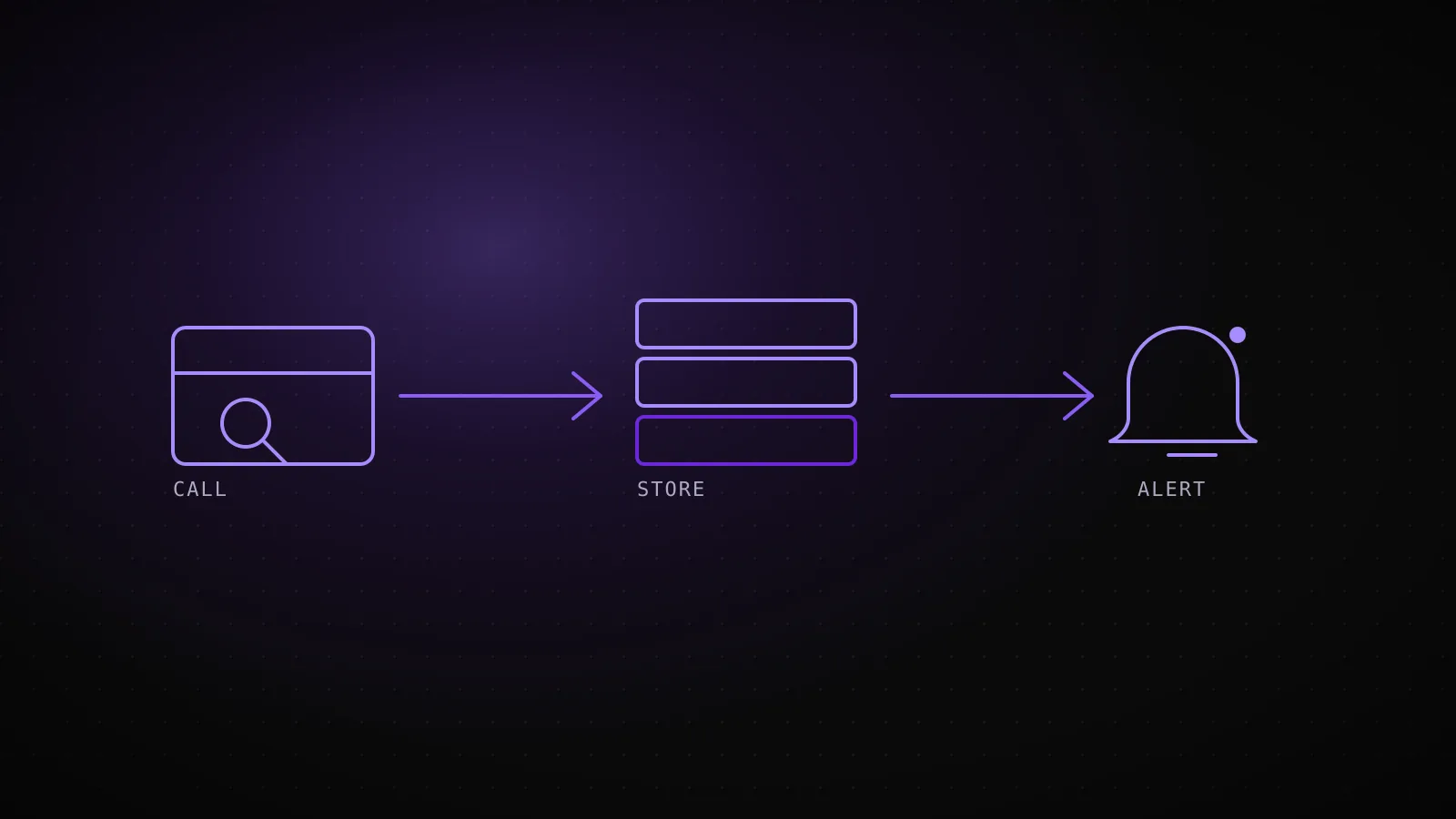
A SERP tracking API returns one thing: a snapshot of where a domain sits in Google's results for a keyword, right now, for a price per call. It does not store that snapshot anywhere, tell you it moved since yesterday, or notice when a page falls off page one - that's the part every "build vs buy" question here is actually about, and it's the part page 1 for this exact search skips past on the way to either a vendor pitch or a "12 APIs tested" price table.
TL;DR - DataForSEO's Google Organic SERP API currently prices at $0.0006/SERP on its standard (queued, ~5 min) tier, $0.0012 on priority (~1 min), and $0.002 on live mode (~6 sec) - live pricing, checked while writing this guide. Raw cost is rarely the reason to buy: dispatchseo.com's own rank-tracking cron currently tracks 27 keywords a night on live mode and that comes to about $1.62/month. What a managed layer actually replaces is the code around the call - batching every project's keyword list, storing a history table instead of one live number, isolating one failed check from killing the whole run, and computing the delta and the alert yourself. Below the few-hundred-keyword range, build it. Past that, the wiring - not the API bill - is what buying actually buys.
What a SERP tracking API actually returns
Call DataForSEO's serp/google/organic/live/advanced endpoint (or the equivalent on BrightData, SerpApi, or any other provider on page 1 for this search) with a keyword, a location code, and a language code, and you get back a ranked list of URLs, titles, and positions for that one search, at that one moment. That's the entire contract. Two params determine whether the result means anything: get the location or language wrong and the API still returns a confident, well-formed answer - for the wrong market, silently. This project's own config carries location_code: 2840 (United States) and language_code: "en"; swap either and every downstream number is wrong in a way nothing in the response flags.
Nothing in that response is a time series, an alert, or a diff against last week. Every vendor on page 1 for "serp tracking api" sells either the raw call (DataForSEO, BrightData, TrajectData, Shifter) or a "best APIs" price comparison across providers (Olostep, Cloro, Serpent API) - none of them frame the actual decision a developer building rank tracking is facing: is the wiring around this call worth building, or worth buying built.
What the calls actually cost right now
Standard queue
$0.6 / 1,000 SERPs
$0.0006 per call, ~5 min turnaround - the cheapest tier when nothing needs same-run freshness.
Priority queue
$1.2 / 1,000 SERPs
$0.0012 per call, up to 1 min turnaround - the middle tier most schedulers never actually need.
Live mode
$2 / 1,000 SERPs
$0.002 per call, ~6 sec average - what a same-session SERP check (like this guide's own gate) pays for.
dispatchseo.com, tonight
~$1.62/mo
27 keywords tracked, checked nightly on live mode - this project's own real rank-cron bill, not a projection.
That fourth card is this project's own number, not a projection - dispatchseo.com tracks 27 keywords, checked nightly by the same daily-ranks cron this guide's build ran under. At 500 tracked keywords the same live-mode math lands near $30/month; at 5,000 it's around $300/month. The API bill scales linearly and stays cheap well past the point most self-hosted setups would want a second project or a second dashboard - which is the first sign that cost math alone won't settle build vs buy here.
What building the tracker actually takes
A single API call isn't a rank tracker. Getting from "one response" to "a system I'd trust to run unattended every night" is the actual DIY project, and it looks like this:
- 1
Batch every (keyword, location, language) triple
one call per combination, looped per project - not one call per keyword globally, or location/language bugs stay invisible
- 2
Store every check, not just the latest position
a table shaped like (keyword, position, checked_at) - overwriting one row per keyword throws away the history a trend needs
- 3
Isolate failures per keyword and per project
one dropped call or one broken project must not fail the whole night's batch - the same reason a multi-tenant cron never lets one failure sink the rest
- 4
Compute the delta yourself
"moved from #14 to #9" is arithmetic against the stored history - the API never returns a comparison, only a snapshot
- 5
Decide what counts as a regression, and alert on it
nothing pings you by default; a dropped-position threshold and a notification path are both code you write
None of these steps are hard individually. Skipping any one of them is exactly how a self-built tracker degrades from "working" to "quietly wrong": no isolation and one bad keyword takes down the whole night's run - the same per-project failure isolation a multi-tenant cron needs for any of its jobs, not just this one; no delta calculation and every position is a number with no story; no alerting and a page falling from #4 to #34 looks identical to a page holding steady, until someone happens to check.
Where a managed layer earns its keep
| | Raw SERP API, self-hosted | A managed rank-tracking layer |
|---|---|---|
| Upfront cost | $0 - pay per call | Usually a monthly seat, on top of the API's own cost |
| What you get per call | Position, title, URL - one moment | The same call, already wrapped in storage and history |
| History & trend | You build the table and the query | Already queryable over one door, by keyword or by day |
| Failure isolation | You write the try/catch per keyword and per project | Already isolated - one broken project can't kill another's run |
| Alerting | You decide what a "regression" is and wire the notification | Already wired, usually to a dashboard or an email digest |
| Multi-project scoping | You add a project_id column and remember to filter by it everywhere | Already the unit the whole system is built around |
The right column isn't a different feature set from the left - it's the left column, already built, plus the operational habit of actually looking at the data. That's the real thing being bought: not access to the API call, which is $0.002 either way, but the part of the system that turns a cron job into something a person trusts enough to stop checking manually - the same trade a free-tool stack swapped for one login makes for research instead of tracking.
When DIY still wins
You already run crons and a database somewhere
the marginal cost of one more table and one more scheduled job is close to zero if that infrastructure already exists
Your keyword set changes rarely
a small, fixed list tracked forever needs none of the alerting or multi-project complexity that makes a managed layer worth its keep
You need request shapes a managed layer doesn't expose
unusual device or location combinations, or raw JSON feeding a different pipeline - control a wrapped product won't give you
You're already paying for the API calls somewhere else
a tracker built around calls you make anyway is marginal engineering cost, not a new line item
The bill was never the objection
at roughly $1.62/month for two dozen keywords, cost alone never justified buying anything - only the wiring did
None of these conditions are about the API being too expensive to justify a managed layer - at $1.62/month for two dozen keywords, it never was. They're about whether the wiring already has somewhere to live.
When none of this matters
If the only thing tracked is a handful of keywords checked by hand once a month, none of the above is worth building or buying - open a browser, run the search, write the number down. This whole comparison only starts paying for itself once "checked" means "checked automatically, every day, for enough keywords that a human re-deriving the history by hand stops being realistic" - the exact point where a dropped check or a missed regression actually costs something.
FAQ
Is a SERP tracking API the same thing as a rank tracker? No. The API is one stateless call - a snapshot for one keyword at one moment. A rank tracker is that call wired into storage, a schedule, and history; nothing about the API itself remembers what it returned yesterday.
What does DataForSEO's SERP API actually cost per check?
$0.0006/SERP on the standard queued tier (~5 min turnaround), $0.0012 on priority (~1 min), $0.002 on live mode (~6 sec) - current pricing, checked live for this guide. Adding a search operator like site: or filetype: to the query multiplies the cost by 5.
How many keywords can I track before the API bill matters? Cost stays close to negligible well into the low thousands - 5,000 keywords checked nightly on live mode runs about $300/month. What usually forces a decision first is the engineering time around the call, not the per-call price.
Does getting the location or language parameter wrong actually break results? Yes, silently - the API still returns a confident, well-formed ranking, just for the wrong market. There's no error to catch; the only fix is checking the params match the property being tracked before trusting a single number that comes back.
Can I switch from DIY to a managed layer later without losing history?
Only if the DIY version stored raw checks, not just a rolling "current position." A table of (keyword, position, checked_at) rows migrates cleanly into almost anything; a script that overwrites one row per keyword has nothing left to import.
The API call was never the hard part, and at a few dollars a month it was never the expensive part either. Price out the wiring instead of the call before deciding: count how many projects will ever need this, whether a dropped check tonight is a shrug or an incident, and whether the table this writes into already exists somewhere. Answer those three honestly and build vs buy mostly answers itself - the API bill was never going to be the tiebreaker.