Majestic alternative - for teams that need more than a backlink index
6 min read
On this page
Majestic indexes backlinks across the open web and scores them with two proprietary numbers, Trust Flow and Citation Flow - a narrow job it has done for over a decade. People go looking for a swap for the obvious reasons: a paid plan starts near $50/month before API access, and the dashboard still reads like 2015. DispatchSEO isn't a backlink-index replacement - nothing here crawls the open web at Majestic's scale - but it does the adjacent job none of Majestic's actual page-1 alternatives do either: fold whatever link and rank signal a project already has into a content decision, and ship it.
TL;DR - Majestic is a pure backlink index: Trust Flow, Citation Flow, nothing else. Every "Majestic alternative" on page 1 is another backlink-index tool with its own metric, not a different kind of product. DispatchSEO doesn't build a crawl-scale link index of its own - it uses the project's own DataForSEO account for that data - and instead automates the step after the index: turning a link or rank gap into a queued idea, a drafted page, and a PR. This project's own account right now: DR-equivalent 0, 4 referring domains, 59 backlinks, on a 27-day-old domain.
Trust Flow, Citation Flow, and the price tag that sends people looking
Trust Flow estimates how trustworthy the sites linking to a page are, weighted by how many clicks separate them from a hand-picked seed set of trusted sites. Citation Flow estimates raw link volume, no trust weighting. Neither is a Google ranking factor - they're Majestic's own scores, built from Majestic's own crawl, useful for comparing links inside Majestic's index and nowhere else. That's the whole product: a link index plus two derived numbers. The reasons people shop for an alternative are ordinary ones - Lite starts near $50/month with API access reserved for a pricier tier, Fresh Index data ages out faster than Historic, and the interface hasn't had a real redesign in years.
Nine results, one category: another index with its own metric
Pull the actual page 1 for "majestic seo alternative" and the pattern is immediate: eight results plus Majestic's own homepage, and seven of those eight are small SEO-niche listicles recommending other backlink-index tools - each with its own version of Trust Flow. Only one, techradar.com, is a recognized major publisher, and even that one reviews Majestic itself rather than naming an alternative.
thenovalab.com
#2"8 Best Free Majestic SEO Alternatives for Backlinks"
madx.digital
#3"10 Best Majestic SEO Alternatives in 2026 (Free & Paid)"
therankmasters.com
#5"9 Best Majestic Alternatives (Budget to Pro)"
keywordkick.com
#6single-tool pitch: cheaper backlink data
zeo.org
#7a review of Majestic itself, not an alternative
adspyder.io
#8"Top Majestic Alternatives"
techradar.com
#9a review of Majestic itself - the one major outlet present
getspike.ai
#10"5 Backlink Tools Compared"
None of the nine names a tool that does anything with the link data once it's pulled. That's the gap - not a missing metric, a missing next step.
The job none of the backlink-index alternatives do
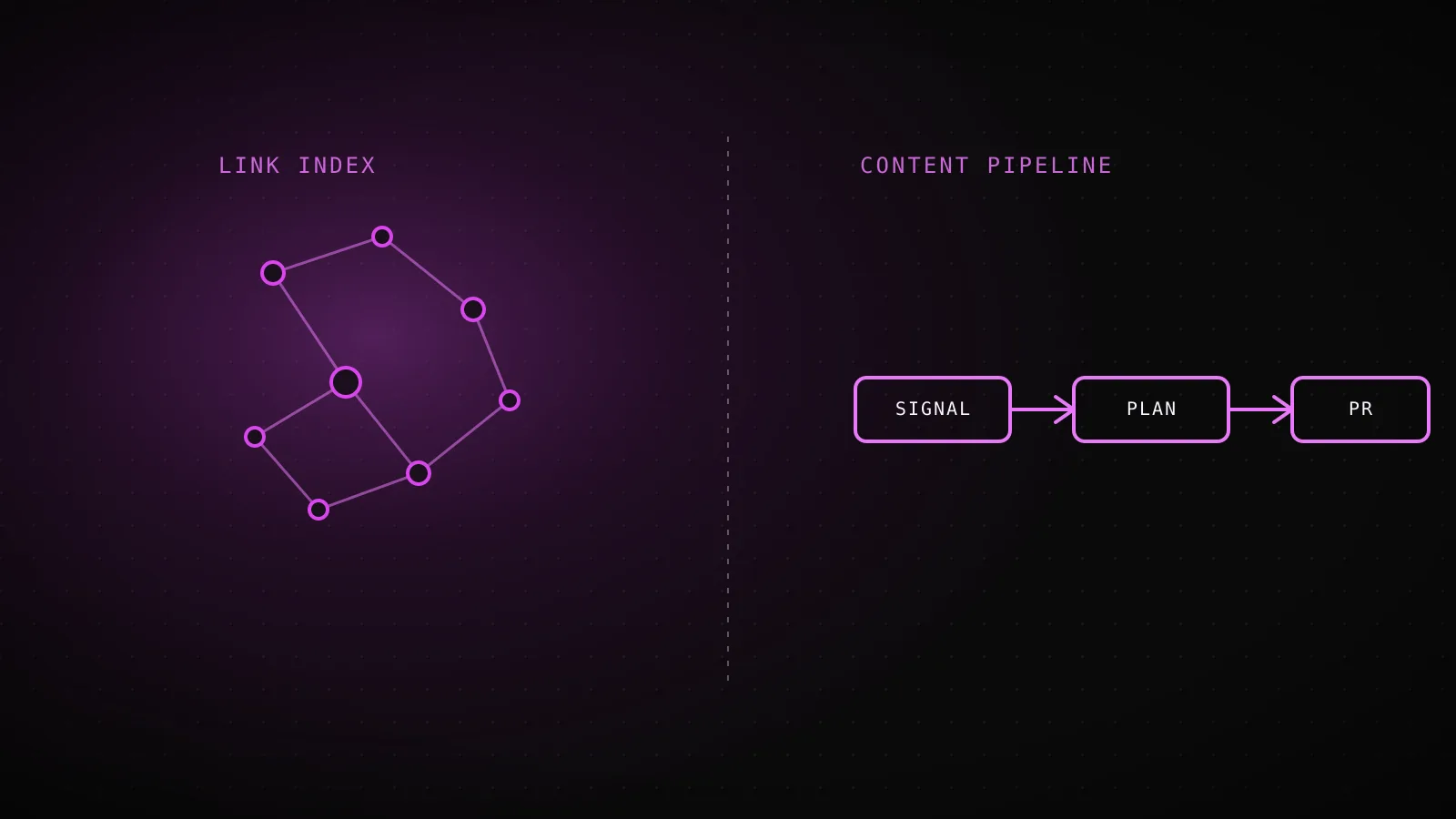
A backlink index answers "what links to this page." It doesn't answer "what should we do about it." DispatchSEO's MCP server is the second half: get_domain_rank reads a project's own link signal from the same kind of DataForSEO account Majestic-alternative shoppers already have or could get, get_backlink_prospects tracks link opportunities as a queue instead of a spreadsheet export, and a gap the data points at becomes a proposed guide or tool - approved, built, and opened as a PR without anyone re-opening the index to check first.
- 1
get_domain_rank
this project's own DataForSEO account - referring domains, backlinks, spam score
- 2
get_backlink_prospects
0 rows right now - prospecting hasn't run for this project yet, shown honestly rather than staged
- 3
propose_suggestion
a content gap the signal points at becomes a queued idea, not a spreadsheet row
- 4
update_suggestion(approved) -> PR
the idea ships as a guide or a free tool, reviewed and merged like any other change
- 5
log_page -> next daily-ranks cron
the new page's own position starts getting tracked the following night
That queue is genuinely empty for this project right now, which the flow above says plainly rather than hiding - prospecting hasn't run here yet. An empty queue is what "the loop exists and hasn't been pointed at anything" looks like, not a claim the loop doesn't work.
This project's own link data, pulled live
Majestic's index goes back over a decade of continuous crawling, so nothing self-hosted and 27 days old was ever going to produce a comparable number. Here's what the same DataForSEO account already behind this project's rank and keyword data actually reports:
dispatchseo.com, get_domain_rank, 2026-08-10
DR-equivalent
0
Referring domains
4
Backlinks
59
Spam score
0
This comes from the same DataForSEO account already behind this project's rank and keyword data - not Trust Flow or Citation Flow, and not on Majestic's scale. Majestic built its index by crawling the web for over a decade; a 24-day-old project reading its own account was never going to produce a comparable number, which is exactly why this guide doesn't pretend to replace the index Majestic sells.
That's a different index, a different algorithm, and not on Majestic's scale - shown as the honest baseline this stack works from, not a Trust-Flow-equivalent DispatchSEO computes.
When a dedicated link index still beats folding it into a pipeline
Majestic (or Ahrefs, which does more with a similar index) is the right call when the job is auditing a competitor's link profile at web scale, building a disavow list, or handing a client a portable authority number they can screenshot - none of that needs an agent CLI running in a repo, and nothing in this stack replaces a purpose-built crawl. It's the wrong trade if the actual job is narrower: keep an eye on a project's own link and rank signal and let a content gap it surfaces turn into a shipped page without a person doing the export-to-decision step by hand. That's the same half-a-suite trade the Moz alternative guide walks through from the audit-and-authority side - a different bundle, the same honest split between the index and what happens after it.
FAQ
What does Majestic actually measure? Two proprietary scores - Trust Flow (link trustworthiness, weighted by proximity to a seed set of trusted sites) and Citation Flow (raw link volume) - built entirely from Majestic's own web crawl. Neither is a Google ranking factor.
Are the "Majestic alternatives" on page 1 actually different products? No. Seven of the eight non-Majestic results are small SEO-niche sites recommending other backlink-index tools, each with its own version of the same Trust Flow-style metric. None names a tool that acts on the data.
Does DispatchSEO build its own backlink index? No. It reads a project's link and rank signal from that project's own DataForSEO account and automates what happens next - a different job from crawling the open web for links.
Can DispatchSEO replace Majestic's Trust Flow or Citation Flow score? No. The domain-rank number it reports comes from a different index and a different algorithm, is not comparable to Majestic's scores, and isn't marketed as one.
Who still needs Majestic or a tool like it? Anyone auditing a competitor's link profile at web scale, building a disavow list, or reporting a portable authority number to a client - jobs that need a crawl-scale index, not a content pipeline.
Is there a cheaper way to check backlinks before committing to a paid index? The best free SEO tools guide covers the free-tier options most shoppers try first; the internal linking tool covers the link-equity side a project already controls, no backlink index required.
Majestic answers a narrower question than most people typing "Majestic alternative" expect - a link index, not a system that does anything with what it finds. The eight listicle-and-review results on page 1 don't widen that scope, they just repeat it with a different vendor's metric attached. Where the actual job is watching a project's own link and rank signal and shipping against what it shows, an agent already running in a repo can close that loop itself - and where it's an audit or a disavow list at web scale, Majestic's own crawl is still the tool for it.